The NANHRI Working Group on the Rights of the Child (the Working Group) was established to strengthen a strategic, coordinated, and sustainable approach among African NHRIs in the promotion and protection of the rights of the child. On this day of 16 June 2026, the Working Group joins the African Union, member states, and civil society organisations in commemorating the Day of the African Child, a day established in memory of the courageous students of Soweto who stood against inequality and demanded their fundamental right to quality education.
This year’s commemoration, under the guidance of the African Committee of Experts on the Rights and Welfare of the Child (ACERWC), focuses on ensuring universal access to water, sanitation, and hygiene (WASH) for every child in Africa. The Working Group reaffirms that access to safe, clean, affordable drinking water and dignified sanitation are fundamental human rights. This right is firmly anchored in Article 14(2) of the African Charter on the Rights and Welfare of the Child (ACRWC), which obliges State Parties to ensure the provision of adequate nutrition, safe drinking water, and adequate sanitation. The African Charter on Human and Peoples’ Rights (ACHPR), as interpreted through the African Commission’s soft law instruments, further links inadequate access to WASH to violations of the rights to life, dignity, and health. Moreover, the Maputo Protocol underscores its gendered impact through Articles 15, 16, and 18 on food security, adequate housing, and a healthy environment, with girls being particularly affected. At the policy level, Agenda 2063 recognises WASH as a strategic priority for sustainable development and economic transformation, while Aspiration 5 of Agenda 2040 reinforces the vision of an Africa truly fit for children, where every child has access to the necessities of life and grows in dignity and well-being.
The Working Group acknowledges and celebrates the positive progress and growing institutional momentum across the continent to expand access to water and sanitation services. Several African governments have made significant strides in adopting WASH strategies and increasing investment in community-level water infrastructure, particularly in rural areas. The African Union, through its dedicated continental focus on sustainable water availability and safe sanitation systems, has further strengthened regional commitment and coordination. This leadership continues to reinforce efforts toward universal, equitable and sustainable access to safe drinking water and adequate sanitation across Africa.
Despite notable progress and the existence of legal and policy frameworks aimed at improving access to water and sanitation, the Working Group expresses deep concern over the persistent and systemic challenges that continue to hinder the realization of safe and adequate WASH services across various jurisdictions. These challenges disproportionately affect marginalized populations, particularly those in rural communities and informal urban settlements, where access to basic services remains limited or unreliable. Today, more than 190 million African children remain exposed to compounded water insecurity. This situation is further exacerbated by climate change, armed conflict, and forced displacement, which make children in fragile contexts three times more likely to lack access to safe drinking water and four times more likely to lack basic sanitation services. These vulnerabilities are further intensified by structural challenges, including insufficient allocation of budgets for post-construction maintenance and the increasing commercialization of water utilities, which can undermine affordability, sustainability and equitable access.
The Working Group further notes with grave concern the disproportionate impact of inadequate WASH services on girls and children with disabilities. The absence of private, safe, and gender-segregated sanitation facilities, coupled with limited access to menstrual hygiene products, results in girls bearing a disproportionate burden of inadequate WASH provision. These combined failures also reflect weak enforcement of equality and non-discrimination obligations in service delivery, particularly in education and displacement settings where minimum service standards are not systematically applied or monitored.
In commemorating the Day of the African Child, the Working Group reminds African governments that the progressive realization of socio-economic rights requires immediate and non-discriminatory measures. State budgeting must adopt a child rights–centered approach that prioritizes sustainable WASH investments over non-essential expenditures, with particular attention to fragile contexts where children are most affected. NHRIs are further encouraged to fully exercise their mandates to investigate systemic violations of the right to water, conduct public inquiries, and monitor State compliance with regional human rights obligations.
Call to Action and Policy Recommendations
Consequently, on this Day of the African Child 2026, the Working Group calls upon all African Union Member States, domestic legislatures, and regional bodies to:
❖ Domesticate international and regional standards on the right to water and sanitation into enforceable national laws.
❖ Increase budget allocations for water and sanitation, with dedicated funding for solar-powered water systems and modern facilities in schools and health centres.
❖ Ensure all schools have private, safe, gender-segregated toilets.
❖ Remove taxes on menstrual hygiene products to improve access for all girls.
❖ Enable human rights institutions and civil society to access and monitor water service data to prevent inequality in service delivery.
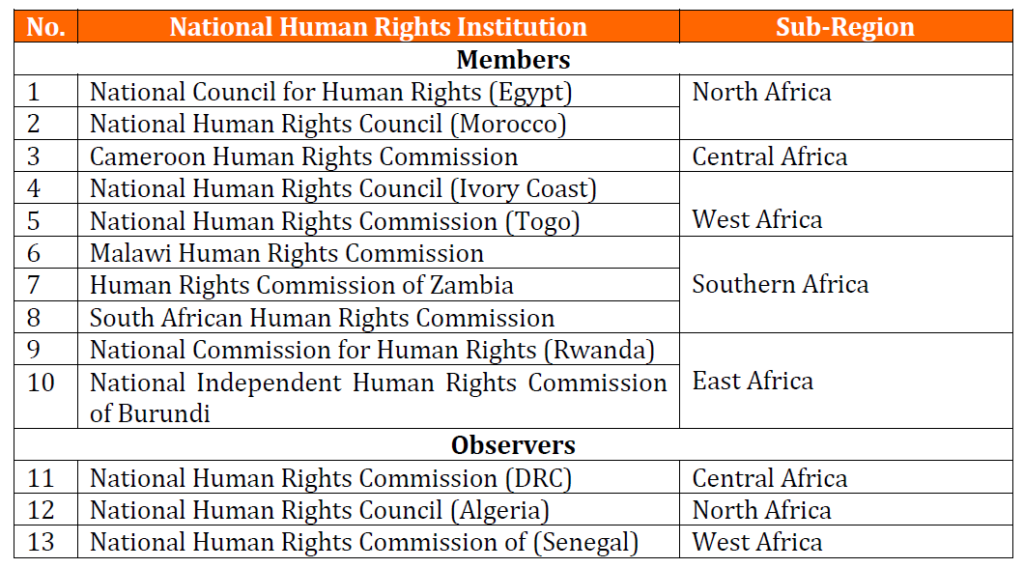
The following members and observers were nominated and subsequently approved by the General Assembly to serve as the inaugural members of the Working Group: